Hotel Housekeeping Electronic DND: Replacing the Physical Tag
Hotel housekeeping electronic DND shows live do-not-disturb from true occupancy, not a tag. This guide links the occupancy sensor to the room status sign.
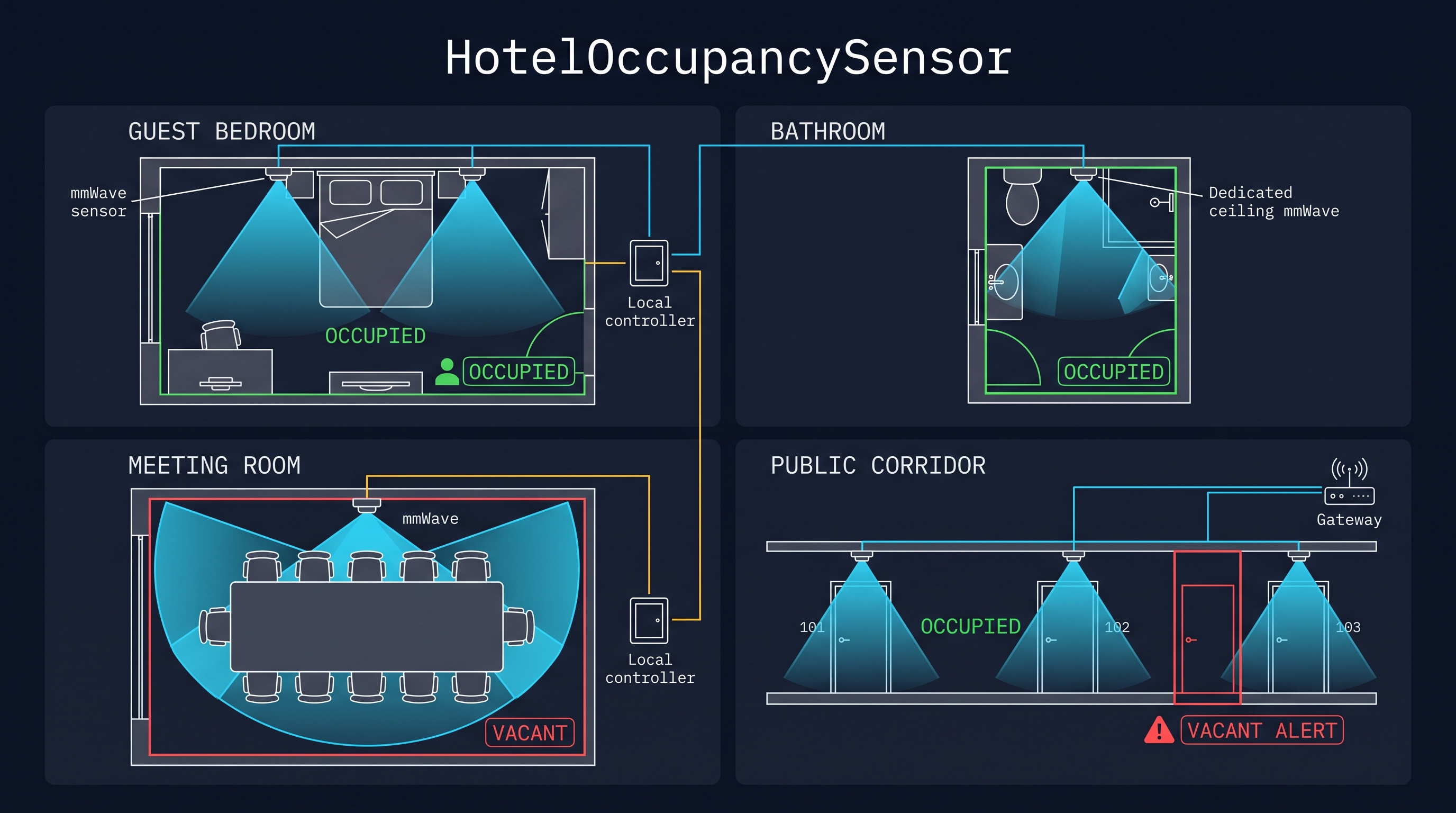
The hotel housekeeping electronic DND problem
Hotels still rely on physical do-not-disturb tags that guests lose, flip wrongly, or never hang. The result is a room status indicator hotel staff cannot trust: a room shows vacant but a guest is asleep inside, or shows DND while the guest has checked out. A hotel housekeeping electronic DND system fixes this by pulling live room status from the occupancy sensor and door sensor instead of from a plastic tag. A hotel occupancy sensor detects the guest; the hotel housekeeping electronic DND system displays that detection on the door and the dashboard. The do-not-disturb state becomes a reflection of true occupancy, not a manual guess. Advanced hotel housekeeping electronic DND systems integrate with property management systems through API endpoints, enabling real-time room status synchronization across housekeeping dashboards, mobile apps, and guest service platforms. These systems typically support Zigbee 3.0, WiFi, and Matter protocols with OTA firmware updates, ensuring compatibility with existing smart hotel infrastructure while providing 99.9% uptime reliability for continuous room status monitoring.
Why an occupancy-driven hotel housekeeping electronic DND beats tags
A hotel housekeeping electronic DND system pulls true occupancy from the ceiling occupancy sensor, so it shows DND the moment a guest is detected and the door is closed — not after a manual tag is hung. When the room is occupied and the door is closed, the hotel housekeeping electronic DND system shows DND automatically, removing the lost-physical-tag problem entirely. A recessed door sensor confirms the door state, so the hotel housekeeping electronic DND system reads occupied-and-door-closed as DND, and vacant-and-door-closed as ready-for-clean. This closed loop between occupancy sensor, door sensor, and hotel housekeeping electronic DND system is what printed tags can never provide. For a hotel operator, an electronic DND system linked to occupancy cuts corridor wait time and the awkward knock-on-occupied-room moment.
Hotel housekeeping electronic DND comparison table
| Factor | Electronic DND system (e-ink) | Printed tag |
|---|---|---|
| Status source | Occupancy sensor + door sensor | Manual guest action |
| Power | Battery-backed e-ink | None |
| Wiring | None (Zigbee/WiFi) | None |
| Accuracy | True occupancy | Guest-dependent |
A hotel housekeeping electronic DND system uses battery-backed e-ink that stays readable without backlight, fitting retrofit doors with no new wiring. The doorbell and room status indicator share the Zigbee mesh or WiFi network of the occupancy sensor, so every door on a floor reports to one system. For new builds, the hotel housekeeping electronic DND system can use PoE for always-on displays; for retrofits, e-ink with battery power is the lower-friction path.
Hotel housekeeping electronic DND use cases
A hotel housekeeping electronic DND system shows DND, vacant, or ready based on the occupancy sensor and door sensor signal. Housekeeping sees the real room status on the door and on the dashboard, so they skip occupied rooms and prioritize vacated ones. A hotel room doorbell paired with the hotel housekeeping electronic DND system can show the guest name and a welcome message on an e-ink panel. The doorbell triggers a chime and a staff notification, while the room status indicator reflects occupancy — no separate DND button required. The hotel housekeeping electronic DND system feeds the same building network as the occupancy sensors, so the housekeeping dashboard shows a single room-status signal per door.
Installing a hotel housekeeping electronic DND system
The room status indicator mounts on the door or door frame with adhesive or screws, linking to the occupancy sensor network in minutes. The hotel room doorbell sits at standard height and pairs to the same building network as the occupancy sensors. A single floor of the hotel housekeeping electronic DND system joins the existing Zigbee mesh or WiFi, reporting room status to the housekeeping dashboard without new gateway infrastructure.
From pilot to rollout
- Spec review: confirm door thickness, existing lock type, and whether e-ink or LCD room status indicator fits the brand standard.
- Sampling: 5-10 electronic DND units and sensors for on-site testing against the occupancy signal.
- Pilot: one floor (20-40 rooms) for 2-4 weeks — confirm room status accuracy and battery life.
- Rollout: mass production, FOB Shenzhen, on-site commissioning with the occupancy system.
- Support: OEM branding, firmware customization, after-sales warranty.
Certifications
CE, FCC, RoHS, and ISO 9001 certified for direct import into EU and US markets. Every hotel housekeeping electronic DND system component ships with compliance documentation.
Not sure which sensor fits your project?
Talk to our mmWave application engineers for a free consultation.
Find the right presence sensor for your hotel project
Compare the 3 protocols, check hotel-specific case studies, and download the installation guide
Related solutions
1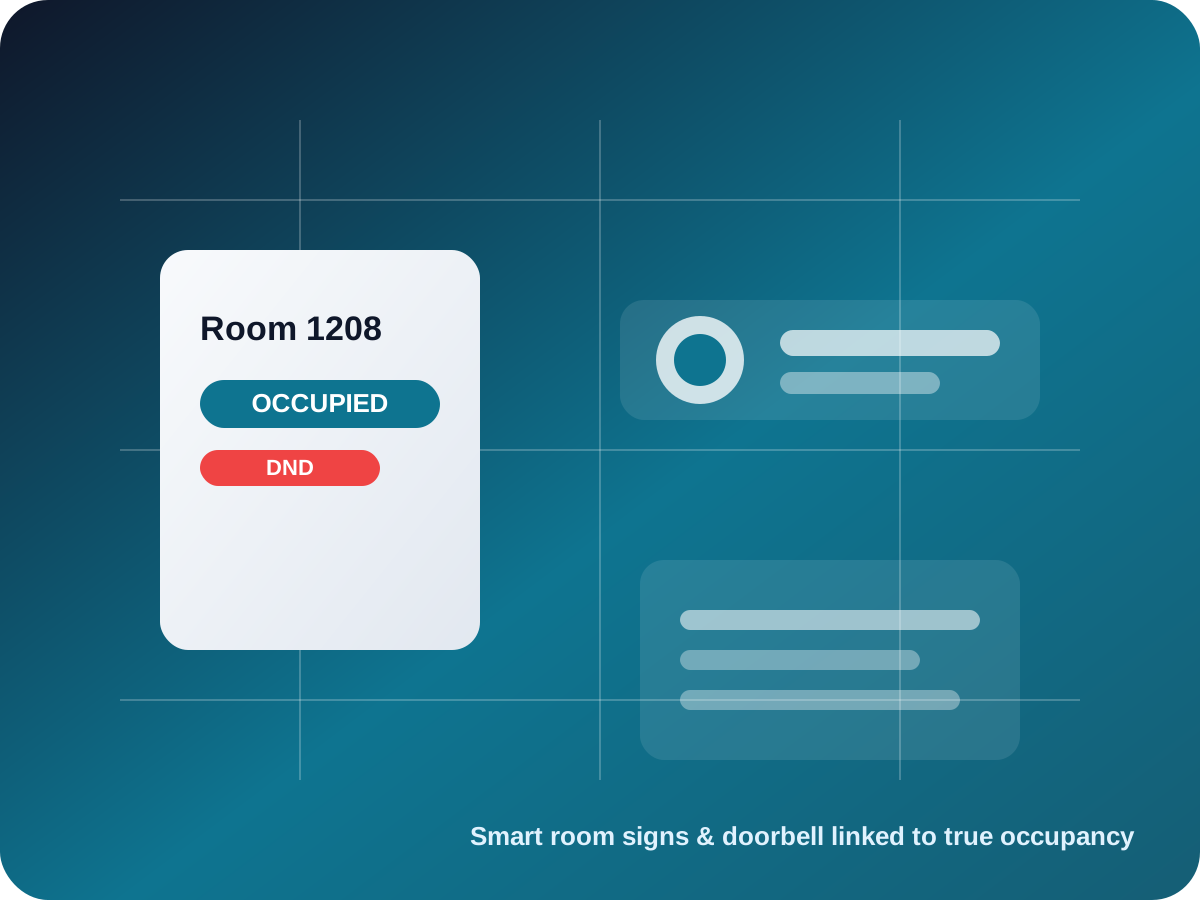
Hotel Housekeeping Electronic DND System — Room Status Indicator
A hotel housekeeping electronic DND system links mmWave occupancy and a door sensor to show live room status. Our hotel do not disturb system replaces physical tags with true occupancy-driven room status signs.
It supports the same product context: smart-room-signs-doorbell.
Related blog posts
3
Bathroom Occupied Sign: E-ink Display from Occupancy Detection
A bathroom occupied sign that lights only when the room is truly occupied, not on a manual slide. This guide covers e-ink signs driven by a presence sensor.
It supports the same product context: smart-room-signs-doorbell.
Hotel Room Signage: E-ink Signs Linked to Occupancy Detection
Hotel room signage that shows live room status from the occupancy sensor beats printed signs. This guide covers smart room signs and doorbell with linked DND.
It supports the same product context: smart-room-signs-doorbell.
Hotel Room Status Sign: Live Occupancy Display from the Sensor
A hotel room status sign that shows live occupied, vacant, or DND from the occupancy sensor. This guide covers e-ink signs driven by true occupancy detection.
It supports the same product context: smart-room-signs-doorbell.
Specify your hotel project with our engineers
Send your room count, ceiling type, and protocol preference. We will return a sample plan and quote within 24 business hours.
- Move from general guidance into a product or application discussion.
- Use RFQ when pricing, drawings, MOQ, or launch timing needs structure.
- Keep a direct contact path visible for fast clarifications and handoff.