Hotel Occupancy Sensor ROI Calculator Guide
Calculate hotel occupancy sensor ROI including energy savings, implementation costs, payback periods, and total cost of ownership analysis for hotels.
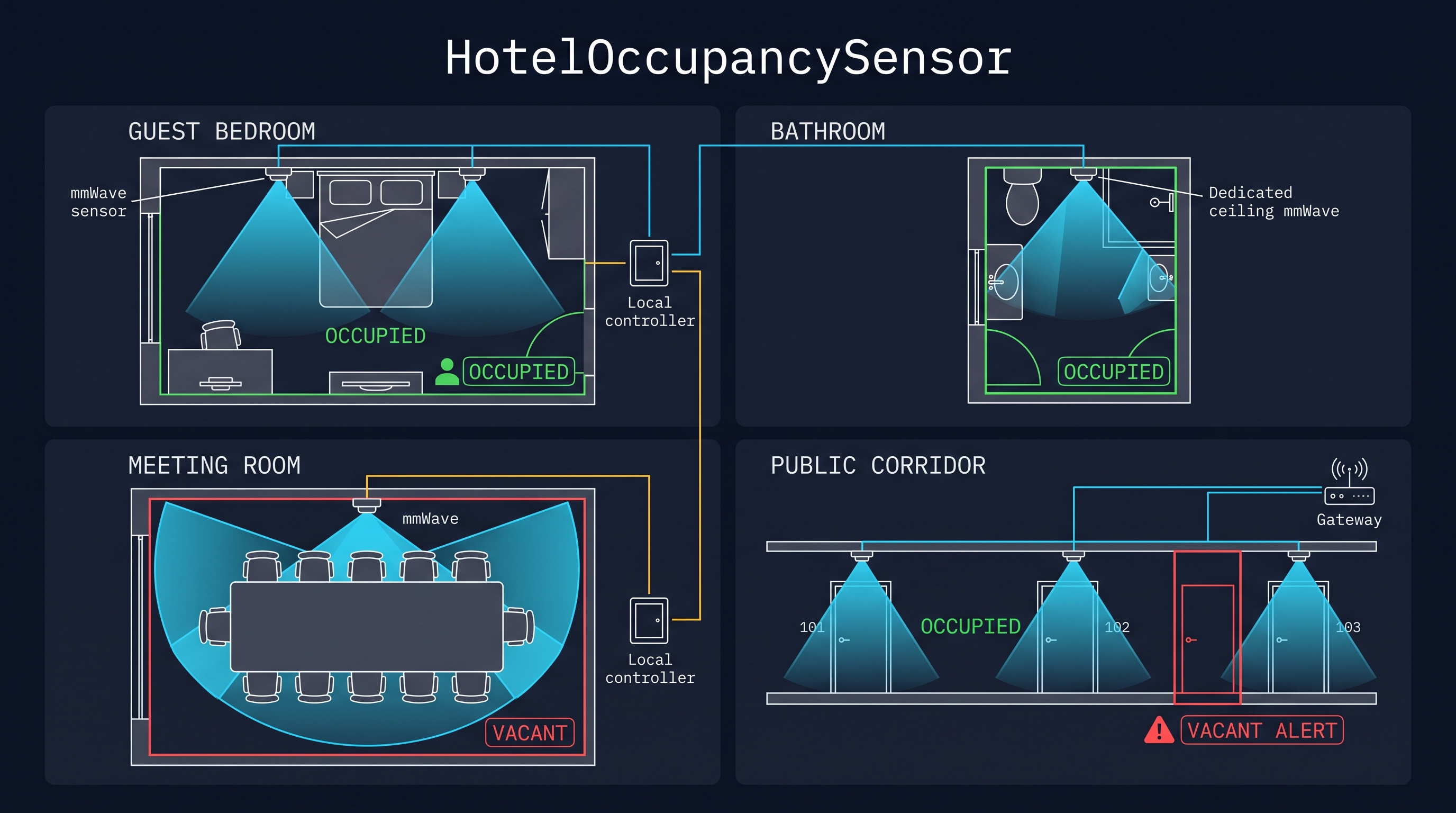
Hotel occupancy sensor ROI calculator enables hospitality properties to quantify the financial benefits of automated room control systems. Occupancy sensors, particularly mmWave technology that detects stationary humans including sleeping guests, can reduce hotel energy consumption by 20-40% through intelligent HVAC and lighting control. The ROI calculation framework incorporates multiple variables including energy costs, occupancy patterns, implementation costs, and secondary benefits such as extended equipment lifespan and reduced maintenance. A comprehensive ROI analysis shows typical payback periods of 6-18 months for occupancy sensor systems, with some high-utility-cost regions achieving payback in under 12 months. The total cost of ownership over 5-10 years often shows net positive returns exceeding 200% of initial investment when all benefits are considered. Hotel occupancy sensor ROI calculator tools help properties make informed investment decisions by providing customized projections based on specific operational parameters.
Understanding the ROI Calculation Framework
Hotel occupancy sensor ROI calculator framework begins with establishing baseline energy consumption before sensor installation. This baseline measurement should span at least 12 months to capture seasonal variations in both energy consumption and occupancy patterns. Collect data on electricity, gas, and water heating consumption at the building level and, where possible, at the room level. Normalize the baseline data for weather variables using heating degree days (HDD) and cooling degree days (CDD) to isolate the impact of occupancy-based automation from weather-related consumption changes. Establish occupancy rates, average length of stay, and room utilization patterns to understand when energy is consumed versus when rooms are actually occupied.
The savings calculation quantifies the reduction in energy consumption attributable to occupancy sensor operation. Calculate savings for each energy system separately: HVAC, lighting, and water heating. HVAC savings typically represent 60-70% of total savings due to the high energy consumption of space conditioning. Lighting savings contribute 20-30% of total savings, with water heating providing the remaining 10-20%. The savings mechanism works through three primary levers: setback temperature during unoccupied periods, reduced runtime duration, and optimized equipment operation. Occupancy sensors enable automatic transition between occupied mode (comfort setpoints) and unoccupied mode (setback temperatures) based on actual room status rather than arbitrary schedules.
Implementation costs include hardware, installation, integration, and training expenses. Hardware costs typically range from $150-300 per room depending on sensor type, control system, and required infrastructure. Installation costs vary from $50-150 per room based on existing infrastructure, wiring requirements, and labor rates. Integration costs for connecting sensors to existing building automation systems or property management systems range from $20-50 per room. Training costs for engineering, housekeeping, and front desk staff typically total $5-15 per room. Total implementation costs commonly range from $225-515 per room with variations based on property size, existing infrastructure, and system sophistication.
Step-by-Step ROI Calculation Process
The hotel occupancy sensor ROI calculator process begins with gathering accurate baseline data. Collect utility bills for the past 12-24 months to establish total energy consumption and costs. If possible, install sub-metering to capture room-level consumption data for more precise baseline measurement. Document occupancy rates, average daily rates, and seasonal patterns to understand the relationship between occupancy and energy consumption. Record current HVAC setpoints, operating schedules, and any existing energy management measures. This baseline data provides the foundation for calculating savings and validating ROI projections.
Calculate potential savings by applying industry-standard savings percentages to baseline consumption. HVAC systems typically achieve 20-40% savings through occupancy-based control. Lighting systems deliver 30-50% savings when combining occupancy sensors with LED retrofits. Water heating systems offer 10-20% savings through occupancy-based recirculation control and temperature setback. Apply these percentages to baseline consumption to estimate annual savings in kWh or therms. Convert energy savings to dollar savings using current utility rates, including both consumption charges and demand charges where applicable. Consider future utility rate escalation when projecting long-term savings.
Determine implementation costs through detailed quotes from vendors and contractors. Hardware costs should include sensors, controllers, gateways, and any required infrastructure upgrades. Installation costs encompass labor, wiring, and any necessary construction. Integration costs cover software, programming, and connection to existing systems. Training costs include staff education and documentation. Add contingency of 10-20% to account for unforeseen expenses. Sum all cost categories to determine total implementation cost. For properties implementing in phases, calculate costs per phase and cumulative costs over the implementation timeline.
Calculate payback period by dividing total implementation cost by annual energy savings. For example, a 100-room property with $400 per room implementation cost ($40,000 total) and $400 per room annual savings ($40,000 total) achieves payback in 12 months. Adjust this simple payback calculation for partial implementation in phased rollouts by prorating both costs and savings. Calculate net present value (NPV) and internal rate of return (IRR) for more sophisticated financial analysis, particularly for larger investments or properties requiring management approval. These time-value-of-money calculations provide a more complete picture of investment attractiveness.
Advanced ROI Factors: Beyond Energy Savings
Hotel occupancy sensor ROI calculator should incorporate secondary benefits beyond direct energy savings to provide a complete financial picture. Extended equipment lifespan represents a significant secondary benefit. HVAC systems operating with reduced runtime and optimized cycling experience 20-30% longer lifespan. For a typical rooftop unit costing $15,000-25,000 with a 15-year lifespan, extending lifespan by 3-5 years provides $3,000-8,300 in avoided replacement costs. Calculate this benefit by estimating current equipment replacement costs and applying the percentage lifespan extension attributable to reduced runtime from occupancy-based control.
Reduced maintenance costs provide another secondary benefit. HVAC systems with optimized operation experience 15-25% fewer service calls. For properties spending $20,000-50,000 annually on HVAC maintenance, this represents $3,000-12,500 in annual savings. Lighting systems with occupancy sensors also experience reduced maintenance due to longer bulb life from reduced operating hours. Calculate maintenance savings by analyzing historical maintenance costs and applying the percentage reduction attributable to optimized equipment operation. These savings accumulate annually and significantly improve total ROI over the equipment lifecycle.
Guest satisfaction improvements, while difficult to quantify directly, contribute to ROI through higher occupancy rates and reduced complaints. Occupancy sensors maintain consistent room temperatures by eliminating temperature drift during unoccupied periods, reducing guest complaints about room comfort. Properties with high guest satisfaction scores typically achieve 2-5% higher occupancy rates and can command premium rates. Estimate this benefit by analyzing the relationship between guest satisfaction scores and revenue performance. Even conservative estimates of 1-2% revenue improvement provide significant financial impact for larger properties.
Regional Variations in ROI Calculations
Hotel occupancy sensor ROI calculator must account for regional variations in energy costs, climate, and regulatory environments. Energy costs vary dramatically by region, with properties in high-cost areas such as California, New York, and European cities achieving faster payback periods. For example, a property paying $0.25/kWh for electricity achieves double the dollar savings compared to a property paying $0.12/kWh for the same energy reduction. Climate affects both baseline consumption and savings potential. Properties in extreme climates (very hot or very cold) have higher baseline HVAC consumption, providing greater absolute savings potential from occupancy-based control. Mild climate properties have lower baseline consumption and correspondingly lower savings potential.
Regulatory environments affect ROI through utility rebates, tax incentives, and compliance requirements. Many utility companies offer rebates for occupancy-based HVAC control systems, typically $50-150 per installed room. Some states and countries offer tax credits for energy efficiency investments. Carbon pricing mechanisms in some regions create additional financial benefits from energy reduction. Compliance requirements such as building energy performance standards may make occupancy sensors necessary for regulatory compliance rather than optional investments. Include these regulatory factors in ROI calculations to accurately reflect the total financial impact.
Labor costs affect installation economics and vary significantly by region. High-cost labor markets increase installation costs but may also increase the value of operational efficiency improvements. Low-cost labor markets reduce installation costs but may reduce the relative value of labor savings from reduced maintenance. Consider both installation cost variations and operational labor cost implications when calculating ROI for international properties. The hotel occupancy sensor ROI calculator should include regional adjustment factors to account for these variations.
Property Size and Scale Considerations
Property size significantly impacts ROI calculations through economies of scale and implementation complexity. Larger properties (200+ rooms) typically achieve lower per-room implementation costs due to economies of scale in purchasing, installation, and integration. Bulk purchasing discounts, optimized installation logistics, and shared infrastructure reduce per-room costs for larger deployments. However, larger properties may require more sophisticated integration with property management systems and building automation, potentially increasing integration costs. The net effect typically favors larger properties with per-room implementation costs 10-20% lower than smaller properties.
Smaller properties (under 100 rooms) face higher per-room implementation costs but may achieve faster relative payback due to simpler operational models. Small properties often have less complex infrastructure, reducing integration complexity and costs. However, they lack purchasing power for volume discounts and may pay premium pricing for equipment and installation. Small properties also have fewer opportunities for operational efficiency improvements beyond direct energy savings. The hotel occupancy sensor ROI calculator should apply size-based adjustment factors to account for these economies of scale effects.
Mixed-use properties with hotels combined with other facilities such as restaurants, spas, or conference centers require nuanced ROI calculations. Energy consumption and savings must be allocated appropriately between different use types. Occupancy sensors in guest rooms may not directly affect energy consumption in other facilities. However, some benefits such as extended equipment lifespan and reduced maintenance may apply across the entire property. Conduct separate ROI calculations for each use type and then aggregate results for property-wide analysis. This approach ensures accurate attribution of savings and costs.
Technology Choice Impact on ROI
The choice of occupancy sensor technology significantly impacts ROI calculations through differences in cost, performance, and reliability. mmWave sensors typically cost $80-150 per unit but provide superior performance including detection of stationary humans, resistance to false triggers, and reliability in diverse environments. PIR sensors cost $30-60 per unit but have limitations in detecting stationary occupants and may experience false triggers from heat sources. The higher performance of mmWave sensors often justifies the higher cost through greater energy savings and reduced guest complaints. The hotel occupancy sensor ROI calculator should model different technology options to identify the optimal choice for specific property requirements.
Wireless vs wired installation approaches affect both implementation costs and long-term flexibility. Wireless sensors reduce installation costs by 30-50% in retrofit applications by eliminating wiring requirements. However, wireless sensors may have higher hardware costs and require battery replacement every 3-5 years. Wired sensors have higher installation costs but lower long-term maintenance requirements. The choice depends on construction type, renovation timeline, and long-term maintenance strategy. For new construction, wired systems may be more cost-effective. For retrofits in operating properties, wireless systems typically provide better ROI despite higher hardware costs.
Integration capabilities affect ROI through impact on operational efficiency and guest experience. Sensors with native PMS integration enable automated room status updates and enhanced housekeeping coordination, providing operational benefits beyond energy savings. Sensors with building automation integration enable more sophisticated control strategies and better monitoring capabilities. However, advanced integration capabilities increase implementation costs. The hotel occupancy sensor ROI calculator should quantify the value of integration capabilities based on specific property operational requirements and guest experience priorities.
Risk Factors and Sensitivity Analysis
Hotel occupancy sensor ROI calculator should incorporate risk analysis to provide realistic projections rather than optimistic best-case scenarios. Energy savings variability represents a significant risk factor. Actual savings may fall short of projections due to factors such as guest behavior override, improper installation, or inadequate maintenance. Conduct sensitivity analysis by modeling savings at 75%, 100%, and 125% of projected levels to understand the impact of savings variability on payback period and ROI. This analysis helps properties understand the range of possible outcomes and make informed decisions about risk tolerance.
Implementation cost overruns represent another risk factor. Unforeseen installation challenges, integration complexities, or requirement changes can increase costs beyond initial estimates. Include contingency of 15-25% in implementation cost projections to account for this risk. For properties with older infrastructure or limited documentation, consider higher contingency percentages. Sensitivity analysis should model implementation costs at 100%, 125%, and 150% of estimates to understand the impact of cost overruns on ROI.
Technology obsolescence risk affects long-term ROI calculations. Rapid technology evolution may render current sensor systems obsolete within 5-7 years, requiring replacement to maintain compatibility with emerging systems. However, properly selected systems with standard protocols and upgrade paths can mitigate this risk. Consider technology lifespan in ROI calculations and model replacement scenarios if obsolescence is a significant concern. Properties with long-term technology planning should evaluate sensor systems in the context of broader smart building strategies to minimize obsolescence risk.
Case Studies: Real-World ROI Examples
A 150-room mid-scale hotel in California implemented mmWave occupancy sensors with integrated HVAC control. Implementation cost averaged $350 per room including sensors, controllers, installation, and integration. Baseline energy consumption was 280 kWh per square meter annually with energy costs of $0.22/kWh. The system achieved 32% HVAC savings and 45% lighting savings, resulting in annual savings of $420 per room. Payback period was 10 months, with 5-year ROI of 420%. Secondary benefits included 28% reduction in guest temperature complaints and 18% reduction in HVAC maintenance costs. The property qualified for $80 per room utility rebate, further improving the business case.
A 300-room luxury hotel in New York City implemented a comprehensive occupancy sensor system including HVAC, lighting, and water heating control. Implementation cost averaged $480 per room due to sophisticated integration requirements and luxury-grade finishes. Baseline energy consumption was 350 kWh per square meter annually with energy costs of $0.28/kWh. The system achieved 28% HVAC savings, 50% lighting savings, and 15% water heating savings, resulting in annual savings of $580 per room. Payback period was 10 months despite higher implementation costs, with 5-year ROI of 510%. Secondary benefits included improved guest satisfaction scores and extended equipment lifespan estimated at $25,000 annually in avoided replacement costs.
A 80-room boutique hotel in Florida implemented wireless mmWave sensors with LED lighting retrofit. Implementation cost averaged $280 per room including sensors, LED fixtures, and wireless installation. Baseline energy consumption was 220 kWh per square meter annually with energy costs of $0.12/kWh. The system achieved 35% HVAC savings and 55% lighting savings, resulting in annual savings of $280 per room. Payback period was 12 months, with 5-year ROI of 380%. The wireless installation minimized disruption to guest operations during implementation, an important consideration for the small property with limited renovation windows.
Implementation Timeline and ROI Realization
Hotel occupancy sensor ROI calculator should account for implementation timeline and phased savings realization. Typical implementation timelines range from 3-12 months depending on property size, complexity, and operational constraints. Phased implementation starting with pilot rooms allows for validation and refinement before property-wide rollout. Savings realization begins gradually as implementation progresses, with full savings achieved only after complete implementation. ROI calculations should model this phased savings realization rather than assuming immediate full savings after initial investment.
The pilot phase typically involves 10-20 rooms and lasts 1-2 months. This phase validates system performance, identifies integration issues, and refines control strategies. Savings during the pilot phase are minimal but provide valuable data for refining ROI projections. The property-wide rollout phase may last 2-10 months depending on property size and implementation approach. Savings accumulate gradually as more rooms come online, with approximately 50% of total savings achieved at the midpoint of implementation and full savings upon completion.
Operational optimization phase begins after complete implementation and lasts 6-12 months. During this phase, control strategies are fine-tuned based on actual performance data, staff become proficient with new workflows, and the system achieves optimal performance. Savings typically increase 10-20% during this optimization phase as the system is refined. ROI calculations should account for this ramp-up period rather than assuming immediate optimal performance. Properties should plan for ongoing monitoring and optimization to sustain savings over the long term.
Financing Options and ROI Impact
Hotel occupancy sensor ROI calculator should consider different financing options and their impact on ROI and cash flow. Traditional capital expenditure requires upfront payment with ownership and benefits accruing to the property. This approach provides the best long-term ROI but requires significant upfront capital. For properties with limited capital budgets, this approach may be prohibitive despite attractive long-term returns. Calculate ROI assuming traditional financing to establish the baseline business case for comparison with alternative financing structures.
Leasing arrangements allow properties to implement occupancy sensors with minimal upfront capital, making monthly payments instead. While total cost of ownership is typically higher due to financing costs, leasing can improve cash flow and enable implementation that would otherwise be delayed. Calculate ROI including lease payments to understand the net benefit. Consider tax implications of lease payments versus capital depreciation. For properties with strong cash flow but limited capital, leasing may provide the best overall financial outcome despite higher total cost.
Energy performance contracting (EPC) arranges financing based on guaranteed energy savings, with payments made from the savings achieved. This approach eliminates upfront capital risk and aligns vendor incentives with actual performance. However, EPC arrangements typically involve higher costs and complex contracts. Calculate ROI including EPC payments and compare with traditional financing. For properties with risk aversion or limited technical expertise, EPC may provide attractive risk-adjusted returns despite higher costs.
Monitoring and Verification for Ongoing ROI
Hotel occupancy sensor ROI calculator should include provisions for ongoing monitoring and verification to ensure projected savings are actually achieved. Install sub-metering to track energy consumption at the system level and, where possible, at the room level. Compare actual consumption to baseline projections adjusted for weather and occupancy. Identify any performance gaps and investigate root causes. Regular monitoring ensures the system continues to perform as expected and enables prompt correction of any issues that could reduce savings.
Implement quarterly ROI reviews to compare actual performance to projections. Track energy savings, cost savings, and secondary benefits such as maintenance reduction and guest satisfaction improvements. Refine ROI projections based on actual performance data. Use these reviews to identify optimization opportunities and validate the business case for expansion to other areas of the property. Continuous monitoring and verification ensures the investment delivers expected returns and provides data for future investment decisions.
Establish performance benchmarks and alerts to proactively identify issues before they significantly impact savings. Set thresholds for energy consumption that trigger investigation when exceeded. Monitor sensor performance indicators such as battery life, communication reliability, and detection accuracy. Address maintenance issues promptly to prevent performance degradation. Proactive monitoring maximizes long-term ROI by ensuring sustained performance rather than allowing gradual performance decline.
Conclusion: Strategic ROI-Based Decision Making
Hotel occupancy sensor ROI calculator provides a structured framework for making informed investment decisions about occupancy-based automation. The typical payback period of 6-18 months and 5-year ROI of 200-500% make occupancy sensors among the most attractive energy efficiency investments available to hospitality properties. However, success requires accurate baseline data, realistic savings projections, comprehensive cost accounting, and ongoing performance monitoring. Properties that approach ROI calculation rigorously and implement systematically achieve the projected returns, while those that cut corners in analysis or implementation often fall short.
The decision to implement occupancy sensors should be based on comprehensive ROI analysis rather than simple payback period calculations. Include secondary benefits, regional variations, property-specific factors, and risk considerations in the analysis. Consider different technology options, financing approaches, and implementation strategies to optimize the business case. Use sensitivity analysis to understand the range of possible outcomes and make risk-informed decisions. The most successful implementations treat ROI calculation as an ongoing process rather than a one-time exercise.
Hotel occupancy sensor ROI calculator tools and frameworks enable properties to make data-driven investment decisions that align energy efficiency with financial performance. By following a structured approach to ROI analysis, properties can implement occupancy sensor systems with confidence in the financial returns while achieving the operational benefits of automated room control. The combination of attractive financial returns, operational improvements, and guest experience enhancements makes occupancy sensors a strategic investment for forward-thinking hospitality properties.
Not sure which sensor fits your project?
Talk to our mmWave application engineers for a free consultation.
Find the right presence sensor for your hotel project
Compare the 3 protocols, check hotel-specific case studies, and download the installation guide
Related products
1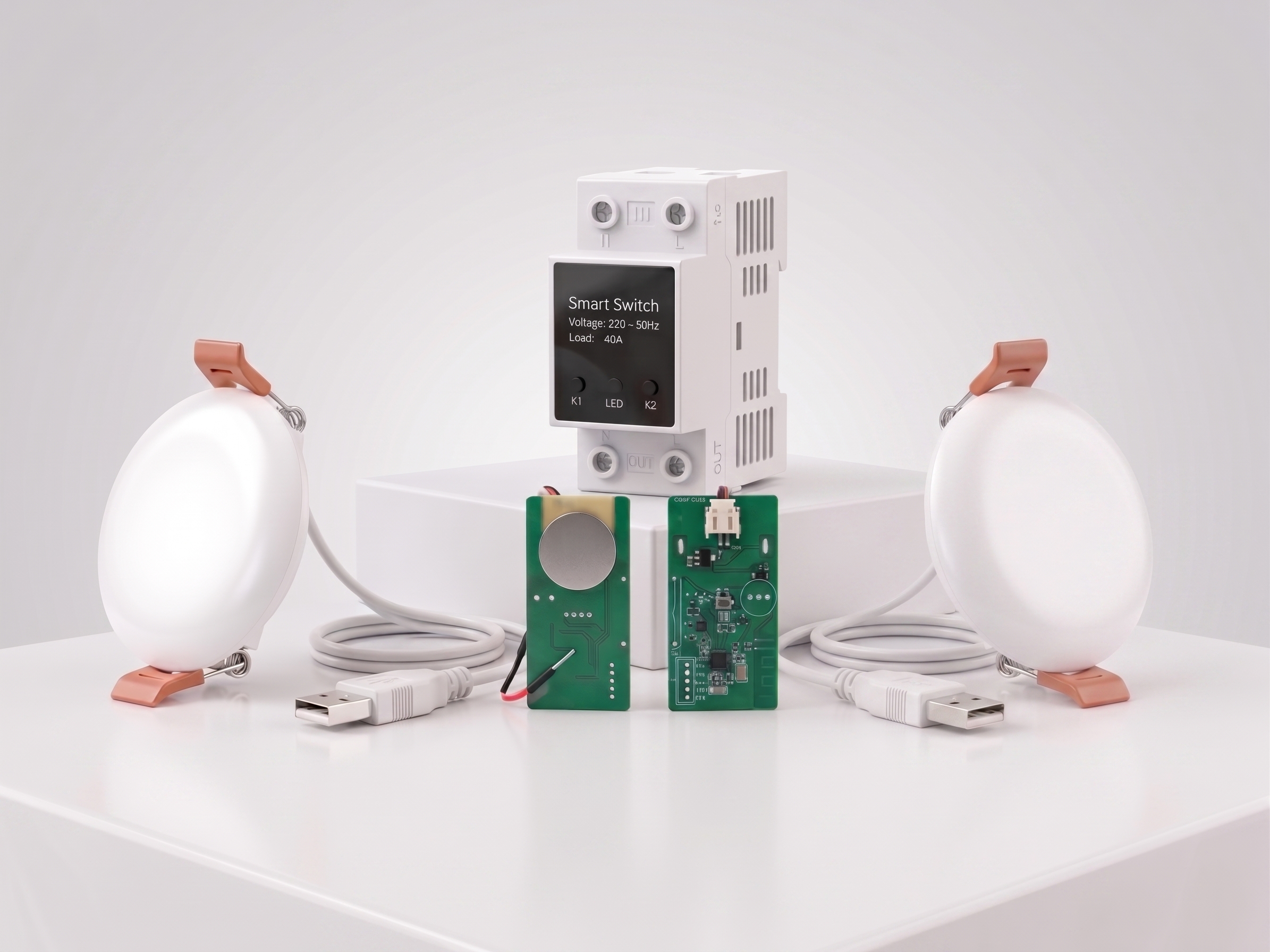
Hotel Energy Saving Control Kit — Dual mmWave Sensors, Door Sensor & Controller
A three-piece hotel energy saving control kit combines ceiling mmWave occupancy sensors for the bedroom and bathroom, an embedded door magnetic contact sensor, and a local central controller. Zero PMS and zero cloud: reduce HVAC and lighting waste with true occupancy detection.
This page already points to it as the next recommended reference.
Related solutions
3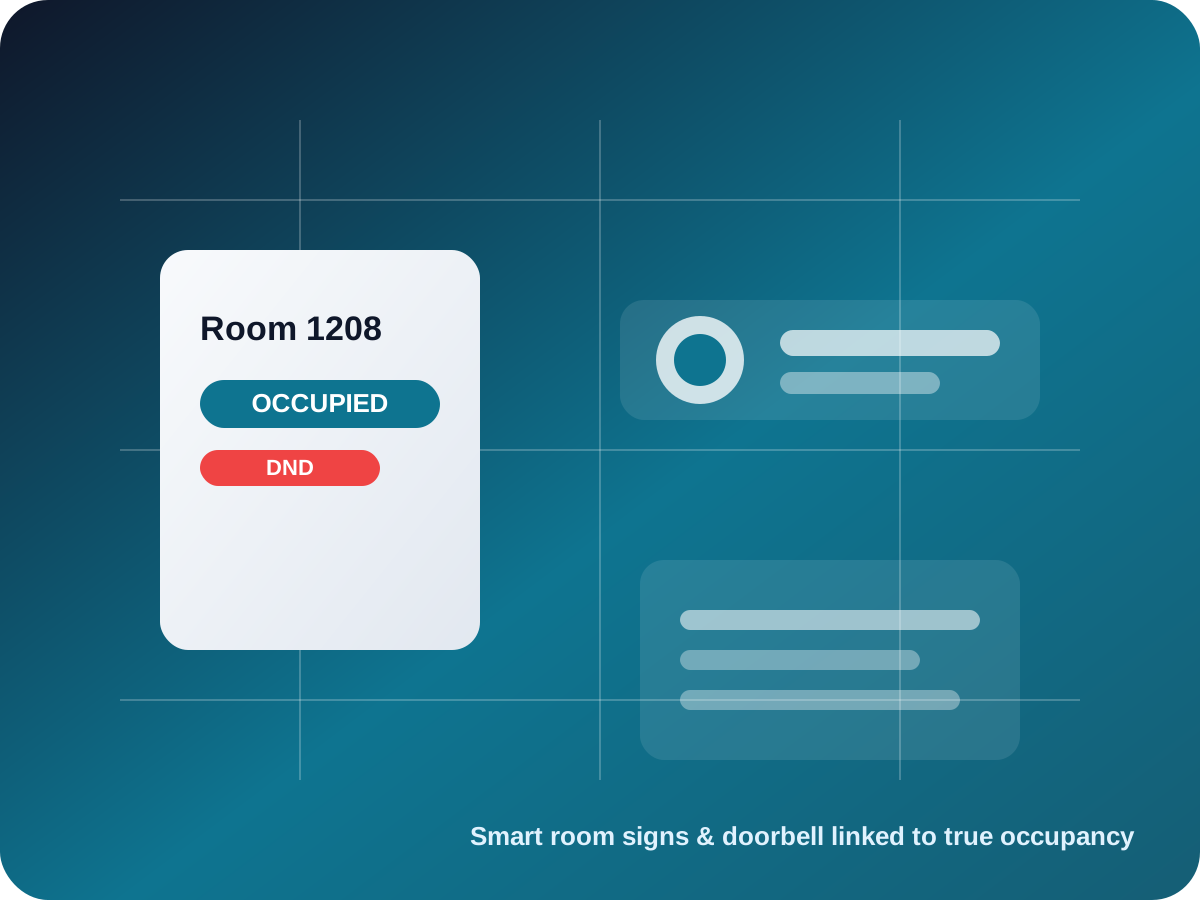
Hotel Energy Management — Occupancy Sensor HVAC & Lighting Control
Hotel energy management that uses an occupancy sensor to drive HVAC and lighting setback the moment a guest leaves. Our energy management system for hotels cuts room energy cost 20-40% with true occupancy detection.
It supports the same product context: Hotel Energy Saving Control Kit — Dual mmWave Sensors, Door Sensor & Controller, hotel-room-occupancy-sensor.
Hotel Housekeeping Electronic DND System — Room Status Indicator
A hotel housekeeping electronic DND system links mmWave occupancy and a door sensor to show live room status. Our hotel do not disturb system replaces physical tags with true occupancy-driven room status signs.
It supports the same product context: hotel-room-occupancy-sensor.
Hotel Room Occupancy System — Intelligent Room Occupancy Management
A hotel room occupancy system that turns mmWave radar presence into live room status, housekeeping signals, and HVAC energy saving. Our intelligent room occupancy system manages guest rooms from one mmWave sensor mesh.
It supports the same product context: hotel-room-occupancy-sensor, Hotel Energy Saving Control Kit — Dual mmWave Sensors, Door Sensor & Controller.
Related blog posts
3
Hotel Energy Savings vs Consumption Analysis
Compare hotel energy consumption patterns with achievable savings through occupancy-based automation and smart HVAC control systems for hotels.
It supports the same product context: Hotel Energy Saving Control Kit — Dual mmWave Sensors, Door Sensor & Controller, ceiling-mmwave-occupancy-sensor, hotel-room-occupancy-sensor.
Hotel Guest Experience Optimization Guide
Optimize hotel guest experience with occupancy sensors through automated comfort control, seamless service delivery, and personalized room environments.
It supports the same product context: hotel-room-occupancy-sensor, ceiling-mmwave-occupancy-sensor, Hotel Energy Saving Control Kit — Dual mmWave Sensors, Door Sensor & Controller.
Inncom vs Honeywell Thermostat Comparison
Compare Inncom and Honeywell hotel thermostat systems across functionality, integration capabilities, cost structure, and suitability for hotel properties.
It supports the same product context: Hotel Energy Saving Control Kit — Dual mmWave Sensors, Door Sensor & Controller, ceiling-mmwave-occupancy-sensor.
Specify your hotel project with our engineers
Send your room count, ceiling type, and protocol preference. We will return a sample plan and quote within 24 business hours.
- Move from general guidance into a product or application discussion.
- Use RFQ when pricing, drawings, MOQ, or launch timing needs structure.
- Keep a direct contact path visible for fast clarifications and handoff.