Are There Sensors in Hotel Rooms? Privacy Facts Guests Should Know
Are there sensors in hotel rooms? A ceiling presence or motion sensor runs the AC and lights, records no image, and reports only a room-level occupancy state.
Is there a sensor in my hotel room
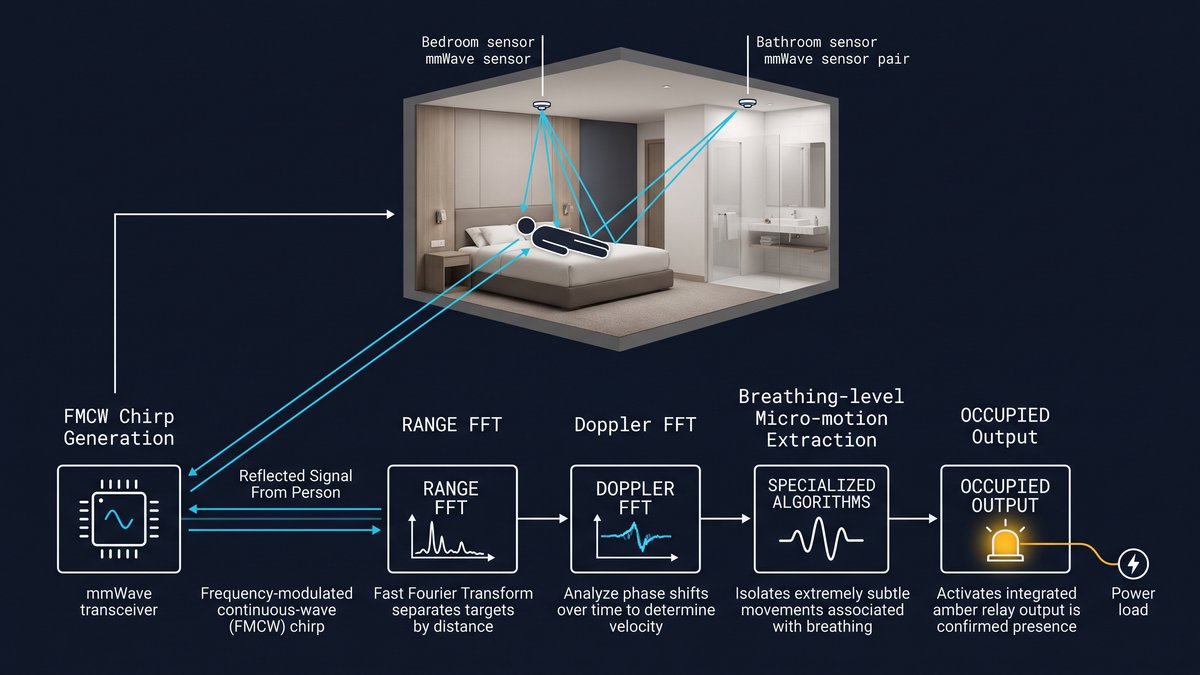
Is there a sensor in my hotel room is a fair question, and the short answer is that many rooms do have one, for the air-conditioning and the lights. The most common sensor is a small dome or puck on the ceiling, either a mmWave presence sensor or a PIR motion detector, and its only job is to tell the thermostat whether the room is occupied so it can cool the room while someone is inside and save energy when it is empty. So yes, in many modern hotels, there is a sensor in the room — but it is an occupancy sensor, not a camera. It measures whether a person is present, typically by a mmWave radar that reads breathing micro-motion or a PIR that reads heat movement, and it reports a simple occupied or vacant state to the room's temperature control. Understanding what the sensor is for clears up most of the worry: it is installed to keep the room comfortable and to stop the air-conditioning from running all day in an empty room, and it is not designed to record images, audio or anything that identifies who is in the room.
What the ceiling sensor actually does
Is there a sensor in my hotel room becomes much less alarming once you know what it actually does. The ceiling sensor's purpose is occupancy detection. A mmWave presence sensor sends a radar signal and determines whether a person is present, even a still person, by reading the micro-motion of breathing. A PIR detector senses a change in body heat and reports motion. Both output a single occupied or vacant state to the room's controller, which uses it to hold the guest setpoint while the room is occupied and to step into an energy-saving setback when the room is empty. The sensor does not produce a picture, does not record a voice, and does not count or identify guests. It works by reflecting a radio wave or detecting heat, so there is nothing stored that shows what a person looks like or says. For a guest, the practical effect is that the air-conditioning and the lights respond to their presence and the room saves energy when they leave.
Privacy facts about the presence sensor
Is there a sensor in my hotel room has a clear privacy answer. The presence sensor used in hotels is designed to detect occupancy, and it is not a surveillance device. A mmWave sensor works by transmitting and receiving a radar signal and measuring whether a human body is present through micro-motion; it does not form an image, so there is no facial or body detail. The output that leaves the sensor is an occupied or vacant state, not audio and not a picture. No recording is kept about what happens inside the room. Hotels install these sensors as part of an energy-management system, and their purpose is the comfort and efficiency of the room, not monitoring the guest. The information they produce is a room-level occupancy flag used to run the heating and cooling. Guests concerned about privacy should ask the front desk about the room's systems, but a properly configured presence sensor does not observe the guest in any identifying way.
Motion detector versus presence sensor
Understanding whether there is a sensor in your hotel room and which kind is installed helps explain its behaviour. A PIR motion detector reacts to movement, so the room knows you are there when you move and may lose you when you sit still, which is why some rooms fall behind on temperature for a quiet guest. A mmWave presence sensor detects a still person through breathing micro-motion, so it keeps the room comfortable while the guest sleeps or works. Both are occupancy devices and neither captures an image or sound. When you find a small ceiling unit, its job is presence for the thermostat. The difference matters mainly for comfort and energy behaviour, not for privacy, since neither type records anything about the guest's appearance or conversation. Knowing the type explains why the temperature stays steady through the night with a mmWave sensor and why a room with only PIR can occasionally drift.
How the room responds to your presence
The sensor in the room changes the environment in a small, predictable way. When the sensor reads occupied, the thermostat holds the guest setpoint and the lights stay on, so the room is warm or cool as set while you are there. When it reads vacant, the controller steps the temperature to a setback and switches off the lights after a timer, saving energy until you return and the sensor triggers on entry or renewed presence. None of this involves observing who you are; it is a state read used by the room's own control. For the guest the effect is that the room reacts to occupancy: comfortable when you are present, economical when you are not. Because the sensing is designed around comfort and efficiency, there is no surprise behaviour, and a guest resting quietly is precisely the state the sensor is expected to handle.
What to do if you are concerned
If you are concerned about whether there is a sensor in your hotel room, the right step is to ask the front desk what the room's systems are and what data they produce. A responsible hotel will explain that the ceiling unit is an occupancy sensor for the heating, cooling and lighting, that it does not record images or audio, and that it reports only a room-level occupancy state. You can also look for the visible hardware, a ceiling dome or puck, and recognise it as an occupancy device rather than a camera. There is no legitimate room of an honest hotel where this sensor performs surveillance on a guest; its entire purpose is to run the room's energy by presence. If the explanation from the staff does not put the matter to rest, you can choose to raise it through the hotel's front desk or management, but the expected answer is that the sensor exists for comfort and saving, and nothing stored relates to the guest as an individual.
The reason the sensor is installed at all
The underlying reason there is a sensor in the room is efficiency with comfort. A hotel wants each room to hold a comfortable temperature while occupied and not to spend energy cooling or heating an empty space for hours. The ceiling presence sensor makes that automatic: occupied keeps the setpoint, vacant saves. The same reading supports smart lighting, so a room is not left lit all day, and it gives the property data on room status that helps housekeeping plan. From a guest's viewpoint the sensor is the mechanism that keeps the room ready on arrival and does not waste energy after departure. There is no guest-facing change, no logging of activity, and no imagery, only a presence flag that tunes the room. That balance of comfort and efficiency is exactly why hotels choose an occupancy sensor, and why the correct reading of the device is one of energy control rather than observation.
The kinds of sensors you may find in a room
Is there a sensor in my hotel room usually has a yes attached to one of a few specific devices, and knowing the kinds helps a guest read the room. The most common is a ceiling occupancy or motion sensor, a small dome or puck that controls the heating, cooling and lighting. Less common is a door sensor, a small block on the frame that tells whether the door is open or closed, used for security and energy. A carbon monoxide or smoke detector is a safety device and is required in most rooms, and a thermostat with an internal temperature sensor reads the room to run the climate control. None of these is a camera. When a guest finds a ceiling puck, it is the occupancy sensor for the thermostat; when they find a small device on the door frame, it is a door sensor; and the round smoke and CO detectors are safety by code. Understanding that every device in a room has a declared job, and that none of them is designed to record a person's image, is the useful way to read the space.
What the sensor does and does not record
Is there a sensor in my hotel room becomes clearer when you look at what these devices actually store. A ceiling mmWave presence sensor detects whether a person is present through reflected radar and reports an occupied or vacant state; it stores no image, no audio, and no identifier for the guest. A PIR detector reports a heat-motion event and keeps no record of what moved. A door sensor logs open and closed events for security and energy, not activity inside the room. None of these produces a recording of the guest, and the energy-management purpose means the data that leaves the room is a state and a run-hour count. If a hotel did track guests in a room, it would have to declare that in its privacy practices, and it would be a different and rare kind of system. The honest answer to the question is that the occupancy sensor is there to run the room, and no identifying data about the person is collected or stored.
Why the sensor needs to see presence
The sensor in the room has to detect presence, not decoration, because its whole purpose is to run the energy correctly. The thermostat cannot know whether to hold the setpoint or step to a saving mode unless it knows whether the room is occupied. A ceiling mmWave sensor answers that by detecting a still person through breathing, so it does not need the guest to move, and it tells the thermostat to hold the room comfortable while the guest is inside and to save only when the room is empty. If the device only sensed that the room was there, as a camera would, it would be surplus to the need and a privacy concern, which is exactly why the design uses a presence flag instead. The sensor sees enough to answer one question, is someone present, and nothing more. That narrow design is what keeps the device small, cheap, private and effective at the job of energy control.
What guests often misunderstand
Much of the worry around whether there is a sensor in my hotel room comes from conflating presence detection with surveillance. A guest who reads that a room "detects motion" may picture being watched, but a motion or presence sensor has no imaging capability at all. It registers a change in heat or a radar reflection and reports a state; there is no frame, no recording and no face. The other misunderstanding is the belief that a sensor that reacts while the guest is still must be a camera, when in fact a mmWave sensor reads breathing micro-motion, which is precisely what lets it cope with a quiet guest without needing an image. Dispelling these two points, that the device cannot record and that it reads presence rather than picture, removes most of the concern. A guest can verify both by looking at the hardware, a small puck with no lens, and by asking the front desk what data the room produces.
How a hotel should answer the question
When a guest asks whether there is a sensor in the room, a well-prepared hotel answers the question plainly. It explains that a ceiling unit is an occupancy sensor for the heating, cooling and lighting, that it detects whether the room is occupied using radar or heat, that it does not record images or audio, and that it reports only a room-level state to the energy system. It confirms that no identifying data is collected or stored about the guest. It can point to the privacy practice that governs what the room collects. A clear, honest answer reassures the guest and reflects a hotel that treats energy efficiency and guest privacy as compatible rather than opposed. If the question feels pointed, the best response is a calm, factual explanation of the device's job, because the occupancy sensor is an efficiency measure and there is nothing about it to conceal.
The balance between efficiency and privacy
The design of the room sensor sits at a deliberate balance between efficiency and privacy, and is there a sensor in my hotel room sits at the middle of that balance. The hotel wants the room to save energy when empty and to be comfortable when occupied, which requires sensing presence. The hotel also wants the guest to have complete privacy, which forbids recording the person. The solution is the narrowest sensor that answers the one question, is someone here, without collecting anything more. A presence flag gives the energy saving and respects the privacy, because nothing identifying leaves the room. This is why the industry converges on occupancy detection rather than monitoring for the comfort job. A guest can take the presence of a small, lens-free ceiling sensor as a sign that the hotel is handling both objectives at once, keeping the room efficient while leaving the guest's private time private.
When the answer might be no
The answer to is there a sensor in my hotel room is not always yes, and the variation is more a matter of the room's age and standard than of privacy. Older or more budget rooms may carry only a smoke or carbon monoxide detector and no occupancy sensor, so the thermostat runs on a fixed schedule and the answer for that room is no additional sensor. Newer and energy-managed rooms add the ceiling occupancy sensor to control the climate and lighting, so the answer there is yes, with the sensor doing energy work. A guest who prefers to know can look for the ceiling puck and read the room honestly: a puck means a presence sensor, its absence means the climate runs on a schedule. Either way the room is protected by the same codes and the same expectation that nothing inside records the guest. The presence or absence of an occupancy sensor changes how the room is cooled and how it saves energy, not how the guest is treated.
Keeping the room comfortable and the bill low
The reason the sensor exists, beyond the privacy and the mechanism, is that it lets the room be comfortable and efficient at once. By holding the setpoint while the room is occupied and stepping to a saving mode when it is empty, the ceiling sensor cuts the air-conditioning and lighting run time across the vacant hours without the guest ever noticing the difference. The same presence reading can serve the front desk for housekeeping and pre-conditioning, so a room is ready on arrival. This is the efficiency that makes the sensor worth installing, and it is achieved with a device that records nothing about the person in the room. For the property the outcome is a lower energy bill and quicker operations; for the guest it is a room that is always the right temperature and a private stay. Is there a sensor in my hotel room, answered well, is a story about comfort and saving, not about observation.
Reading the sensor hardware for yourself
If you want to check whether there is a sensor in your hotel room without asking, the hardware reads clearly once you know what to look for. A small lens-free dome or puck on the ceiling, usually over the bed area, is an occupancy or motion sensor that runs the thermostat and the lights; it has no camera lens and no visible recording unit. A thin block on the door frame is a door sensor for open and closed state. The round devices high on the wall or ceiling are smoke and carbon monoxide detectors and are required safety equipment. A wall panel with a slot for a card is a card switch that powers the room by the inserted key. None of these is a camera, and none records the guest's image. Once you can name what each device does, reading a room becomes simple, and the presence or absence of the ceiling puck simply tells you whether the climate is controlled by real occupancy or by a fixed schedule.
How the industry treats the sensor
Across the hotel industry the ceiling occupancy sensor is treated as an efficiency device, and that is the context that answers whether there is a sensor in your hotel room with confidence. An energy management system, of which the occupancy sensor is the sensing part, is a standard way hotels cut the cost of cooling and lighting empty rooms; it is installed for the purpose of saving energy while keeping the guest comfortable. International energy-management practice regards this class of presence sensing as a normal building control, distinct from any form of surveillance, because it answers one question, is the room occupied, and retains no identifying data. Hotels adopting this technology follow that same boundary, using the sensor to run the climate and lighting and nothing more. For a guest the useful conclusion is that the device exists across the industry as a comfort and cost measure, and that a well-run hotel operates it strictly within that role, so the honest answer stays one of efficiency rather than observation.
A final clear answer
So, is there a sensor in my hotel room? In many energy-managed rooms there is, and it is a ceiling occupancy sensor that detects whether someone is present, so the air-conditioning and the lights run for a person and save energy when the room is empty. It is not a camera, it does not record images or audio, and it reports only a room-level occupied or vacant state to the temperature control. The reason it needs to sense presence at all is comfort and efficiency: to hold the room at the setpoint while you are inside and to step down the load when it is empty. Nothing that identifies you is collected or stored, and a well-run hotel explains this plainly. If you find a small puck on the ceiling, that is what it is doing. The honest, useful answer is that the sensor exists to keep your room comfortable and the property efficient, and your privacy is unaffected by it.
Not sure which sensor fits your project?
Talk to our mmWave application engineers for a free consultation.
Find the right presence sensor for your hotel project
Compare the 3 protocols, check hotel-specific case studies, and download the installation guide
Related blog posts
3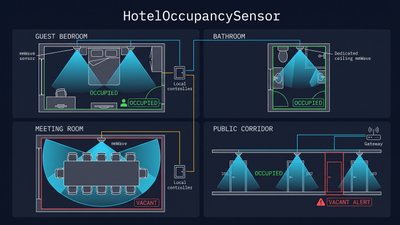
Guest Room Occupancy Energy Management System
A guest room occupancy energy management system links ceiling mmWave presence to the thermostat and lighting so the HVAC runs only in truly occupied rooms.
It supports the same product context: ceiling-mmwave-occupancy-sensor, hotel-occupancy-sensor.
Hotel Room Occupancy Sensing Solution for Energy Savings
A hotel room occupancy sensing solution uses ceiling mmWave sensors to run HVAC and lights only when a room is truly occupied. A guide for owners.
It supports the same product context: ceiling-mmwave-occupancy-sensor.
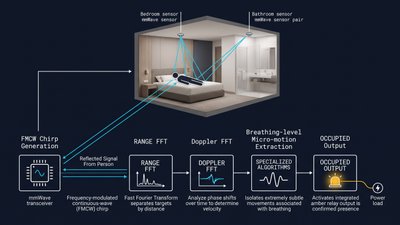
How Do Hotel Thermostats Detect Occupancy in a Room?
How do hotel thermostats detect occupancy: a ceiling mmWave sensor or a PIR reads presence and drives the AC, while a door switch or card adds a hint.
It supports the same product context: ceiling-mmwave-occupancy-sensor, hotel-occupancy-sensor.
Specify your hotel project with our engineers
Send your room count, ceiling type, and protocol preference. We will return a sample plan and quote within 24 business hours.
- Move from general guidance into a product or application discussion.
- Use RFQ when pricing, drawings, MOQ, or launch timing needs structure.
- Keep a direct contact path visible for fast clarifications and handoff.