Skip to content
Hotel Energy Management — Occupancy Sensor HVAC & Lighting Control
Solution

Hotel Energy Management — Occupancy Sensor HVAC & Lighting Control

Hotel energy management that uses an occupancy sensor to drive HVAC and lighting setback the moment a guest leaves. Our energy management system for hotels cuts room energy cost 20-40% with true occupancy detection.

Hospitality Hotels Serviced Apartments Vacation Rentals
Last Updated: 8/29/2026
Answer Snapshot

Qualification facts buyers can extract quickly

Hotel energy management that uses an occupancy sensor to drive HVAC and lighting setback the moment a guest leaves. Our energy management system for hotels cuts room energy cost 20-40% with true occupancy detection.

Last Updated
8/29/2026
Who it is for
Hotel chains and hospitality AV/IT integrators specifying energy management systems, Hotel operations and sustainability directors targeting energy cost, Smart building contractors bidding hospitality energy projects
Use cases
Occupancy sensor HVAC and lighting control for guest rooms, Energy management systems for hotels with true occupancy setback, Vacation rental automatic check-out and power-down
Certifications
CE, FCC, RoHS, ISO 9001
Served markets
Worldwide (CE/FCC certified)
Export context
Designed for hospitality OEM ODM projects requiring an occupancy-driven hotel energy management system
Next step
Send your room count and HVAC type — we will size the hotel energy management system and return a payback estimate.

The hotel energy management problem

Hotels spend a disproportionate share of energy on guest rooms that are empty part of the day — yet most legacy hotel energy management systems cannot tell whether a guest is still in the room. A key-card switch cuts power when the card leaves the slot, but a guest who leaves the card in and steps out still wastes energy, and a guest who takes the card to the pool loses HVAC entirely. A fixed timer keeps HVAC on for 15 minutes after the last motion, so a napping guest gets cut off and the next re-cool cycle wastes more. An occupancy sensor changes the equation: it detects a sleeping or seated guest, so the hotel energy management system holds comfort while present and fires setback on real vacancy.

Why an occupancy sensor beats timers and key-card switches

A hotel energy management system comparison starts with the failure modes of legacy controls. A key-card switch has no presence awareness — it trusts the card, not the guest. A fixed timer guesses with a delay, so a reading guest loses comfort and a departing guest keeps HVAC running for the full interval. An occupancy sensor HVAC link avoids both: the mmWave radar core detects micro-motion and breathing, holding comfort while the guest is present, and the recessed door contact sensor confirms exit so the room powers down without a delay guess. Hotel rooms are the classic energy-waste case — a guest soaking in the tub generates little movement, so timer-based systems keep HVAC at comfort and waste the re-cool cycle. An occupancy sensor reaches 2.5m micro-motion detection (or 5m on 60GHz), covering a bed and seating area from the ceiling. This hotel energy management system is the right fit where energy cost is a board-level concern.

Hotel energy management system components

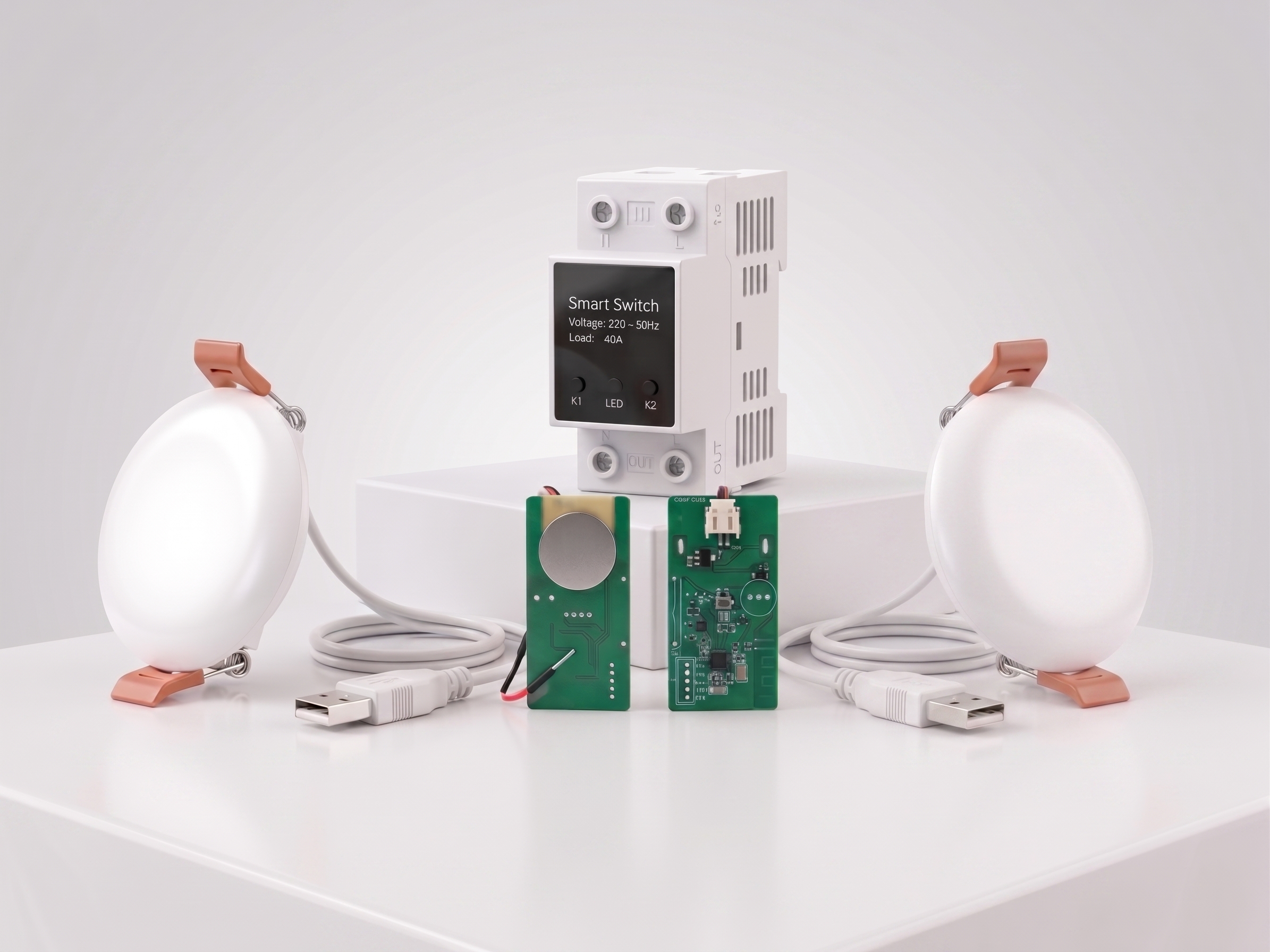
Component Role in occupancy-driven energy management
mmWave occupancy sensor Detects motion, micro-motion, breathing — holds HVAC/comfort while guest present
Recessed door contact sensor Fires on door latch move — instant lights-on entry, confirms exit for setback
Central controller Switches HVAC (2A), lighting (2A) on occupancy state
Energy dashboard Reports per-room and per-floor consumption

The hotel energy management system is designed as a coordinated occupancy sensor HVAC bundle, so procurement and commissioning are one line item rather than three. The occupancy sensor reaches 2.5m micro-motion detection, covering a bed and seating area from the ceiling, while the door sensor handles the entry/exit edge case the radar cannot catch instantly. All share one Zigbee 3.0 mesh, so the hotel energy management system reads a unified occupancy signal. No other energy management system for hotels on the market combines breathing-level detection with door-state and controller linkage in one stack.

Occupancy sensor HVAC and lighting energy saving

A hotel energy management system drives two of the largest hotel energy loads: HVAC and lighting. The occupancy sensor triggers HVAC setback the moment a guest leaves, not after a fixed timer, and dims or switches lighting based on presence. Hotels typically cut room energy cost 20-40% with true occupancy-based control, because the occupancy sensor HVAC link reacts to actual departure within seconds rather than guessing with a timer. Occupancy sensor HVAC control means the room is at comfort the instant a guest returns and at setback the instant they leave — no re-cool penalty from a full shutdown, no waste from a false-vacant hold. A hotel energy management system is the fastest-payback retrofit in a guest-room energy program.

Installation and power of the hotel energy management system

The occupancy sensor flush-mounts into a standard ceiling cutout; the central controller drops into the electrical panel or a wall box on AC 100-240V; the recessed door contact sensor hides in the lock gap on lock battery power. DC5V low-voltage input simplifies OEM integration of the occupancy sensor, and the central controller uses standard relay wiring familiar to any electrician. As a Zigbee hotel energy management system, it uses 3.0 mesh networking that scales to whole-floor hotel deployments without WiFi congestion, and it works with Tuya Smart Life and any standard Zigbee 3.0 gateway. A single hotel energy management system covers one guest room; a floor of systems joins one mesh reporting to the building energy dashboard.

Hotel energy management system for smart building automation

A hotel energy management system sits at the heart of any hotel energy program — it is the occupancy-to-action layer that HVAC zoning, lighting scenes, and energy reporting all depend on. This occupancy sensor HVAC bundle combines mmWave radar with a Zigbee 3.0 mesh controller so the occupancy signal drives relays across the room. The system reports three distinct states (motion, micro-motion, breathing) so the controller picks the right action — dim lights to 30% on micro-motion, hold HVAC at comfort on breathing only, full setback on vacancy. For teams building a hotel energy management system fleet across hundreds of rooms, Zigbee 3.0 mesh makes the deployment reliable at building scale without dedicated gateways or WiFi congestion.

From pilot to rollout

  1. Energy audit: baseline current HVAC and lighting load per room type.
  2. Sampling: 5-10 occupancy sensors and a controller for on-site validation of energy savings.
  3. Pilot: one floor (20-40 rooms) for 2-4 weeks — measure HVAC and lighting reduction.
  4. Rollout: mass production, FOB Shenzhen, on-site commissioning with the BMS or PMS.
  5. Support: OEM branding, firmware customization, after-sales warranty.

Certifications

CE, FCC, RoHS, and ISO 9001 certified for direct import into EU and US markets. Every hotel energy management system component ships with compliance documentation.
Related Content

Find the right presence sensor for your hotel project

Compare the 3 protocols, check hotel-specific case studies, and download the installation guide

Related products

1
Hotel energy saving control kit with occupancy sensor, central controller, and door sensor
ProductEnergy Saving KitsEnergy Saving Control Kit

Hotel Energy Saving Control Kit — Dual mmWave Sensors, Door Sensor & Controller

A three-piece hotel energy saving control kit combines ceiling mmWave occupancy sensors for the bedroom and bathroom, an embedded door magnetic contact sensor, and a local central controller. Zero PMS and zero cloud: reduce HVAC and lighting waste with true occupancy detection.

Why this is next

This page already points to it as the next recommended reference.

Related solutions

3
Hotel Housekeeping Electronic DND System — Room Status Indicator
SolutionHospitality

Hotel Housekeeping Electronic DND System — Room Status Indicator

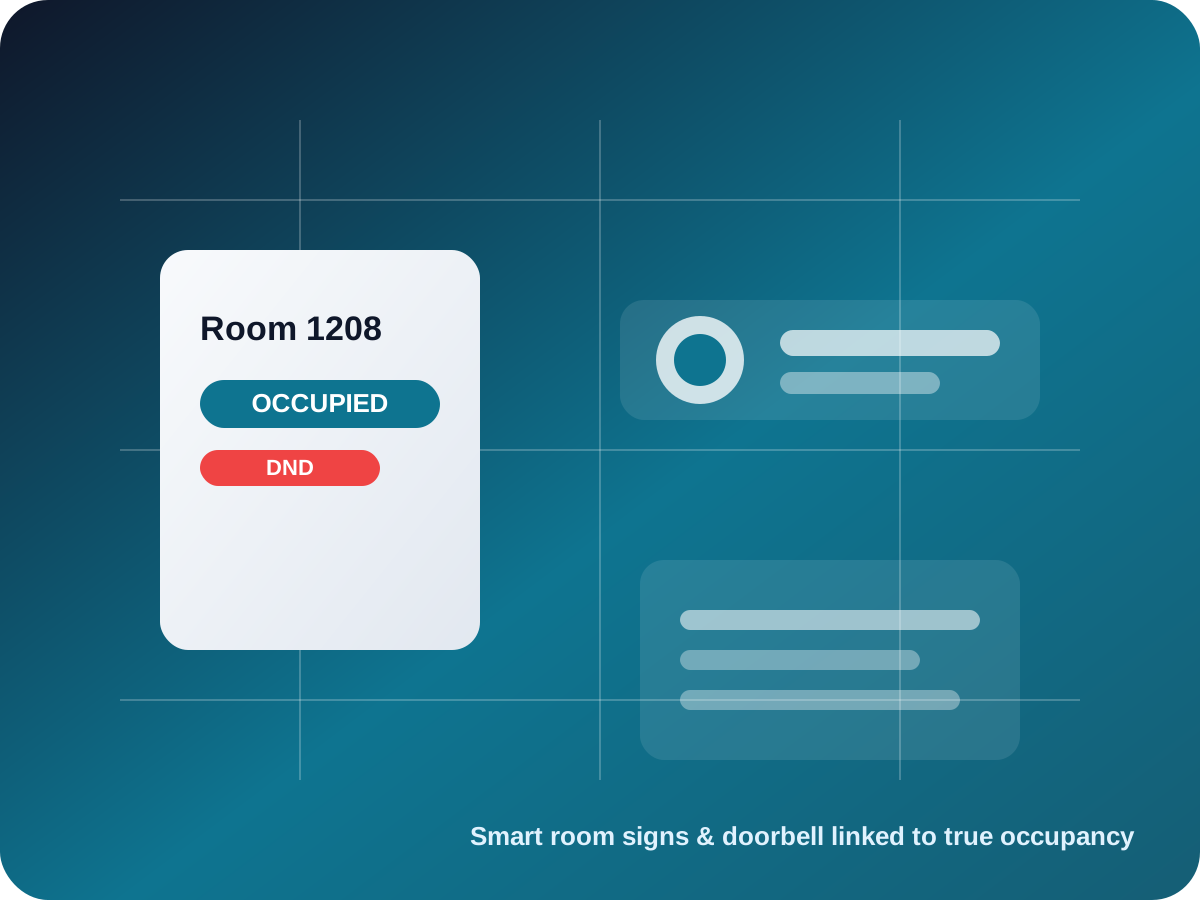
A hotel housekeeping electronic DND system links mmWave occupancy and a door sensor to show live room status. Our hotel do not disturb system replaces physical tags with true occupancy-driven room status signs.

Why this is next

It supports the same product context: hotel-room-occupancy-sensor, recessed-door-contact-sensor.

Hotel Room Occupancy System — Intelligent Room Occupancy Management
SolutionHospitality

Hotel Room Occupancy System — Intelligent Room Occupancy Management

A hotel room occupancy system that turns mmWave radar presence into live room status, housekeeping signals, and HVAC energy saving. Our intelligent room occupancy system manages guest rooms from one mmWave sensor mesh.

Why this is next

It supports the same product context: hotel-room-occupancy-sensor, recessed-door-contact-sensor, Hotel Energy Saving Control Kit — Dual mmWave Sensors, Door Sensor & Controller.

Related blog posts

3
Hotel energy savings vs consumption analysis showing occupancy sensor integration with HVAC systems
ArticleGuidesHotelOccupancySensor Engineering Team

Hotel Energy Savings vs Consumption Analysis

Compare hotel energy consumption patterns with achievable savings through occupancy-based automation and smart HVAC control systems for hotels.

Why this is next

It supports the same product context: Hotel Energy Saving Control Kit — Dual mmWave Sensors, Door Sensor & Controller, hotel-room-occupancy-sensor.

Hotel guest experience optimization with occupancy sensors showing automated room control and guest comfort features
ArticleGuidesHotelOccupancySensor Engineering Team

Hotel Guest Experience Optimization Guide

Optimize hotel guest experience with occupancy sensors through automated comfort control, seamless service delivery, and personalized room environments.

Why this is next

It supports the same product context: hotel-room-occupancy-sensor, Hotel Energy Saving Control Kit — Dual mmWave Sensors, Door Sensor & Controller.

Hotel occupancy sensor ROI calculator dashboard showing energy savings metrics and cost analysis
ArticleGuidesHotelOccupancySensor Engineering Team

Hotel Occupancy Sensor ROI Calculator Guide

Calculate hotel occupancy sensor ROI including energy savings, implementation costs, payback periods, and total cost of ownership analysis for hotels.

Why this is next

It supports the same product context: Hotel Energy Saving Control Kit — Dual mmWave Sensors, Door Sensor & Controller, hotel-room-occupancy-sensor.

Next Step

Translate solution fit into a live RFQ path

Solution pages work best when the visitor can continue into the product set, supporting documents, and the correct contact route without starting over.

  • Pair the workflow story with concrete products and delivery proof.
  • Keep supporting resources close to the process explanation.
  • Route the reader into RFQ while the implementation logic is still clear.
Ready for RFQ

Share your product requirements and get a practical next step

Send your drawings, target quantity, and timeline. Our sales engineering team will respond within 24 business hours with a practical next step, a quote, or a sample plan.

Send a quick inquiry

Tell us what you need — room size, target volume, timeline. We respond within 24 business hours.

A clear brief helps the team reply within one business day with the right catalog, sample route, or quotation next step.